
Blade Qualities
Steel grades, hardness and wear patterns
Grade comparison
| Grade | Hardness | Wear resistance | Impact toughness |
|---|---|---|---|
| 1.2067 | 60 HRC | 1× | 38 J |
| D2 | 60 HRC | 2× | 28 J |
| M2 | 64 HRC | 2.5× | 27 J |
| M4 | 64 HRC | 3.5× | 18 J |
| ASP 2023 | 65 HRC | 7.5× | 38 J |
| ASP 2053 | 65 HRC | 9× | 41 J |
| Carbide | 90 HRA | 18× | 4 J |
Indicative figures. Wear resistance: 1.2067 = 1.
Wear patterns
The standard choice is D2 (1.2379), 58–60 HRC.
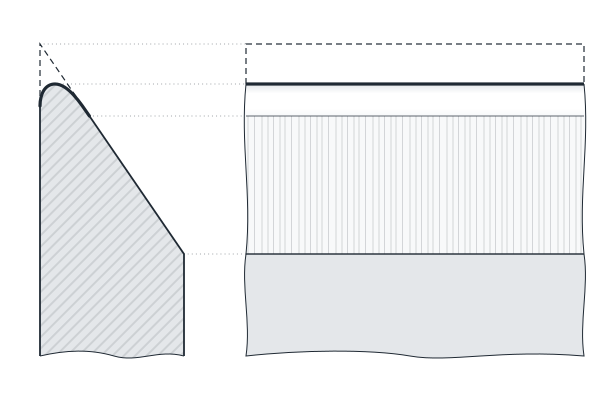
Evenly rounded, shiny edge
Abrasive wear, the normal wear pattern.
Powder high speed steel ASP 2023, 64–66 HRC.
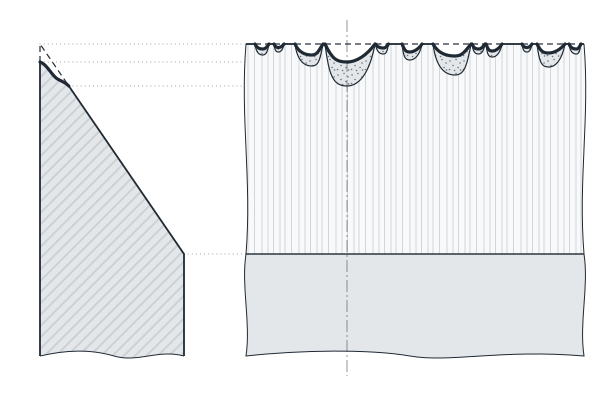
Small chips along the edge
The edge is too hard for the load, or the blade sees impact or vibration.
Lower hardness or a tougher grade.
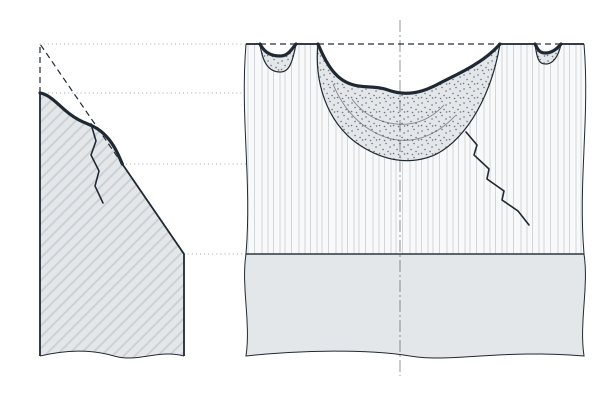
Large chips or a fracture
Foreign object, wrong setting or a loose mounting.
Check the setting and the mounting.
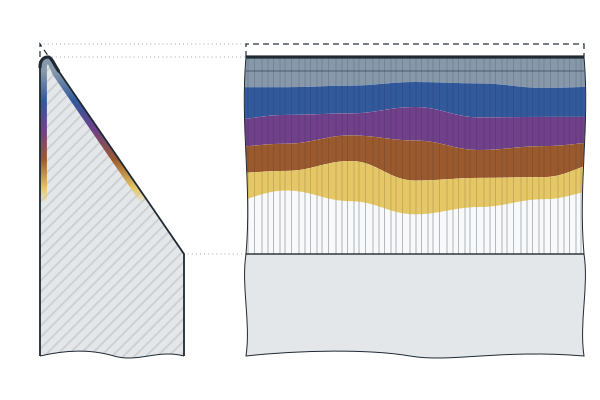
Edge darkened or blue
Overheating. Blue forms at about 300 °C, and a low-tempered steel has softened by then.
High speed steel M2 (1.3343), 62–65 HRC, or powder steel. They hold their hardness to about 550 °C, low-tempered D2 to about 200 °C.
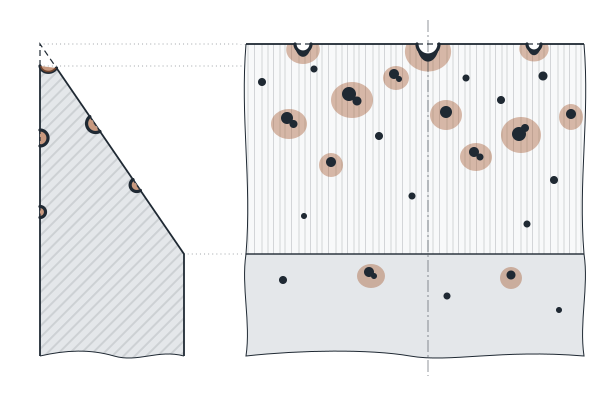
Corrosion or pitting
Moisture, acidity or cleaning agents.
Stainless grade, 54–58 HRC.
Grades by product
| Product | Grades and hardness |
|---|---|
| Upper knives, shear cutting | ASP 2023, ASP 2053, CPM 10V |
| Lower knives, shear cutting | Cemented carbide or powder steel |
| Crush cutting knives | D2 |
| Core cutting knives | D2, HSS, ASP 2023, ASP 2053 |
| Cross-cutting knives | D2 58–60 HRC, powder steel (ASP 2023, ASP 2053, CPM 10V) 64–66 HRC, cemented carbide |
| Granulator blades | D2 or powder steel, 56–59 HRC. Also with a carbide edge. |
| Crusher rotor knives and counter blades | D2 and special steels, 52–59 HRC. Inserts in HSS, ASP or cemented carbide. |
| Chipper blades | Chipper knife steel, 54–58 HRC |
| Veneer lathe blades | Tool steel for softwoods 58–60 HRC, hot work steel for hardwoods 54–58 HRC, HSS edge 64–66 HRC on a tough body |
| Hammer crusher parts | Hardox 400, 450, 500 and 600, hardness 400–600 HB |
Hardness and composition
| Grade | Delivery hardness | Composition, weight % | Use |
|---|---|---|---|
| Tool steel 1.2067 (102Cr6) | 58–60 HRC | C 1.0 · Cr 1.5 | When impact is a bigger risk than wear. |
| D2, 1.2379 (X153CrMoV12) | 56–64 HRC | C 1.55 · Cr 12.0 · Mo 0.7 · V 1.0 | The standard choice for most cutting work. |
| High speed steel M2 (HSS), 1.3343 (HS 6-5-2C) | 62–65 HRC | C 0.90 · Cr 4.3 · Mo 5.0 · W 6.5 · V 1.9 | When the blade runs hot. |
| High speed steel M4 (HSS), 1.3351 (HS 6-5-4) | 63–65 HRC | C 1.30 · Cr 4.2 · Mo 4.5 · W 5.6 · V 4.0 | When M2 wears too fast. Grinding is slower. |
| Powder high speed steel ASP 2023 (HS 6-5-3C) | 64–66 HRC | C 1.28 · Cr 4.0 · Mo 5.0 · W 6.4 · V 3.1 | Abrasive wear, when D2 is not enough. |
| Powder high speed steel ASP 2053 (HS 4-3-8) | 64–66 HRC | C 2.48 · Cr 4.2 · Mo 3.1 · W 4.2 · V 8.0 | Highly abrasive fillers: glass fibre, quartz, grit in recycled material. Grinding is slower. |
| Stainless steel | 54–58 HRC | – | Chemical and food industry, wet environments and exposure to cleaning agents. Moderate wear resistance. |
| Cemented carbide | 89–92 HRA | WC + Co | Pure abrasion in a rigid machine, typically the lower knife. Accurate setting, impact-free running. |
D2 at different hardnesses
| Hardness | Wear resistance | Impact toughness |
|---|---|---|
| 56 HRC | 1.0× | 68 J |
| 58 HRC | 1.1× | 43 J |
| 60 HRC | 1.15× | 28 J |
| 62 HRC | 1.2× | 20 J |
| 64 HRC | 1.3× | 14 J |
- 56–58 HRC
- Better impact resistance
- 58–60 HRC
- General use
- 60–64 HRC
- Best wear resistance
Contact us
or scan with your phone